
"You Can Do It!" Drill: Building Fundamentals in Three Rounds

Updated: Jul 26
If you’re looking for a training drill that packs maximum value into minimum rounds, the “You Can Do It!” drill delivers. In just three shots, you’ll test trigger control, reload speed, and command discipline—all while working under time pressure in a precision zone.

What You’ll Need
∙ Distance: 7 yards
∙ Target: Head-only zone
∙ Ammunition: 1 round in the chamber, 1 round in the magazine (2 rounds total in the gun), plus a spare magazine with at least 1 round
∙ Timer: Set par time to a comfortable reload time
The Setup
Start with your firearm aimed at the center of the head. Your finger should be off the trigger—either outside the trigger guard or lightly touching the front of it. You’re already on target, already aimed. This isn’t about the draw; it’s about what happens next.
The Sequence
First Beep: Smash the trigger as hard as you can and fire. Immediately fire a second shot with the same aggressive trigger press. Your gun will lock back empty.
Emergency Reload: Perform your reload as quickly and efficiently as possible. Get that fresh magazine in, release the slide, and reacquire your sight picture on the head.
Second Beep: Fire your third and final shot.
That’s it. Three rounds. Multiple fundamentals tested.
What This Drill Teaches
Trigger Control at Speed
Those first two shots reveal everything about your grip. If your grip is correct and strong enough, you can smash that trigger as aggressively as you want and the bullet will still go exactly where you’re aimed. If the shot goes off target, you’re either influencing the firearm before the shot breaks, or your grip isn’t strong enough to control the gun during that violent trigger press.
This is diagnostic shooting at its finest. A slow, careful trigger press can mask grip deficiencies. An aggressive press exposes them immediately.
Emergency Reload Under Pressure
You’re not casually swapping magazines at the range. You’ve just gone empty, the timer is running, and you need to get back in the fight. This is where your reload mechanics either hold up or fall apart. Are your movements efficient? Is your spare magazine positioned for a clean draw? Can you execute under time pressure?
Command Drill Discipline
Here’s where most shooters struggle: after that reload, you’re back on target with a loaded gun and adrenaline pumping. Every instinct says “shoot now.” But the drill requires you to wait for the second beep.
This is the Command Drill principle in action. Most shooters use a par timer as a stopwatch—racing to beat a set time, often sacrificing quality for speed. The Command Drill flips this approach by using the timer to build awareness instead of just measuring speed.
By waiting for that second beep after your reload, you’re forced to ask yourself:
∙ Are my sights stable, or are they still settling?
∙ Is my grip fully established, or did I rush back onto the gun?
∙ Am I visually ready, or am I just reacting?
When that second beep sounds, your reaction time should ideally be 0.25 seconds or less. This measures not just your speed, but your readiness. Were you truly prepared to fire, or were you anticipating and starting to press early?
Why It Works
This drill doesn’t waste time or ammunition. In three rounds, you’re working:
∙ Aggressive trigger control
∙ Grip strength and stability
∙ Reload mechanics under time pressure
∙ Visual discipline and target reacquisition
∙ Reaction time measurement
∙ Shot placement in a precision zone
It’s quick enough to run multiple repetitions without burning through your ammo budget, but challenging enough that every repetition matters.
Progression: Making It Harder
Once you’ve mastered your initial par time—consistently making all your hits in the head zone and completing your reload before the second beep—it’s time to increase the pressure.
Drop your par time by one-tenth of a second. Then do it again. The goal is to make you faster and more efficient with each iteration. This progressive pressure is where real performance gains happen. You’re not just executing the drill; you’re pushing your capabilities forward.
As the timer gets tighter, your movements must become cleaner. Wasted motion disappears. Your reload gets smoother. Your reacquisition gets sharper. This is how you build speed without sacrificing precision.
Dry Fire Practice
The beauty of this drill? You can run it in dry fire just as effectively as live fire.
Set up at 7 yards with a head-sized target zone. Load your gun with snap caps or empty it completely. Use the same timer settings and run through the exact sequence: aggressive trigger presses on the first two “shots,” emergency reload, reacquisition, and hold for the second beep before your final press.
Dry fire lets you run dozens of repetitions, refining your reload mechanics, testing your grip stability during aggressive trigger presses, and training that command discipline—all without spending a dime on ammunition. When you do get to the range, your live fire will simply confirm what you’ve already mastered at home.
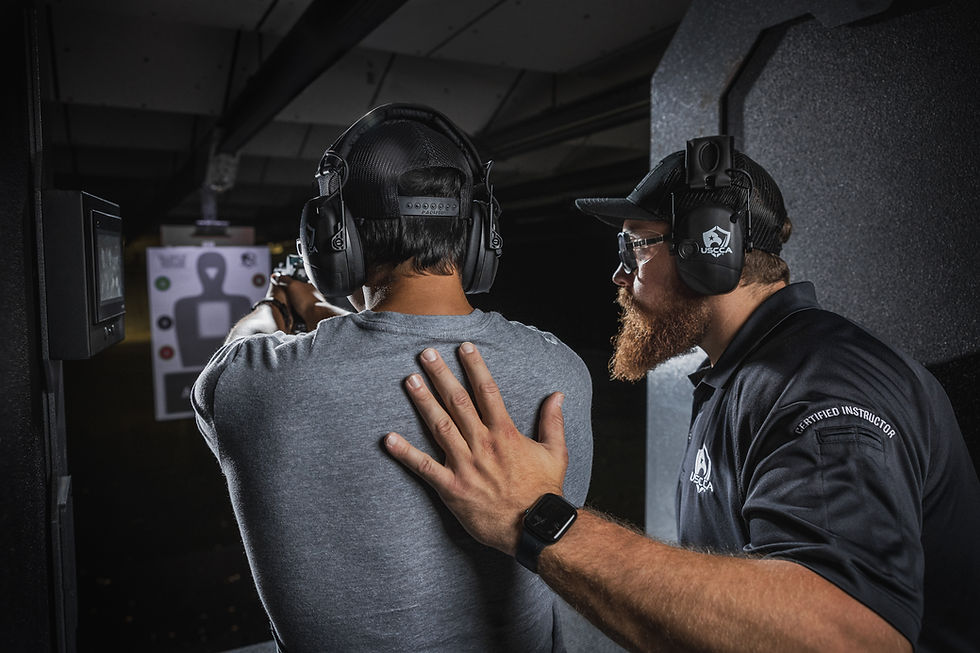
Running the Drill
Start with a generous par time—something that feels comfortable for your reload. As you improve, tighten that window. The goal isn’t to create anxiety; it’s to create just enough pressure that your fundamentals either hold or reveal their weaknesses.
Watch those first two shots carefully. If they’re staying in the head zone despite your aggressive trigger press, your grip is doing its job. If they’re scattering, slow down and rebuild that foundation before chasing speed.
After the reload, pay attention to that moment before the second beep. Are you calm and ready, or are you rushing? The best shooters can hold perfect stillness while staying ready to react instantly.
The Bottom Line
The “You Can Do It!” drill earns its name. It’s challenging but achievable. It tests real fundamentals without requiring elaborate setups or excessive round counts. And most importantly, it gives you immediate, honest feedback about where your skills actually are—not where you think they are.
Load up, set that timer, and prove to yourself: you can do it.


Great read, and definitely going to work this into my shooting drills. Thank you Michael.