
TruBreak Training Tool Review: The $50 Device That Fixed My Transition Problem
- Michael Bine
- Dec 20, 2025
- 6 min read


I thought my trigger control was solid. After thousands of rounds and countless hours of dry fire practice, I was confident in my fundamentals. Then the Next Level Training TruBreak showed me something I’d been doing wrong for who knows how long—and it happened during a simple transition drill.
The Moment Everything Changed
I had set up three targets at five yards, spaced about 1-2 yards apart. The drill was straightforward: start on the middle target, transition left, then swing to the far right. I’d done this drill hundreds of times during live fire. I was working with the TruBreak’s most difficult landing plate (the third one) with the blinder attachment on to really challenge myself.
First transition—the trigger dropped into the gutter. The device forced a reset.
My immediate reaction? Confusion. I was certain I’d pressed the trigger perfectly. But the TruBreak doesn’t lie. What I discovered was eye-opening: I was pulling the trigger toward my next target during transitions. I wasn’t just breaking the shot and then moving—I was pulling through the shot as I initiated movement to the next target.
Suddenly, my live fire results made perfect sense. At 7-10 yards during transitions, my first shot on each new target would land outside the A-zone, typically in the C-zone. My sights were on target, but my trigger press was sabotaging the shot. The second shot would land in the A-zone because I’d already completed the transition and settled. I’d been compensating for a flaw I didn’t even know existed.
How I Discovered the TruBreak
I need to give credit where it’s due: I learned about the TruBreak from Kerry Dugan at Archangel Defense. Without his recommendation, this tool wouldn’t be part of my training arsenal. It’s a reminder that good training often comes from connecting with experienced instructors who stay current on effective tools and techniques.
How the TruBreak Works

The TruBreak uses a brilliantly simple mechanism. When you press the trigger, a balance system reveals whether your press is straight back or drifting left or right. Press it perfectly, and you can continue. Let the press drift, and the trigger falls into a “gutter,” forcing you to reset the entire system with a tap-rack motion before continuing.
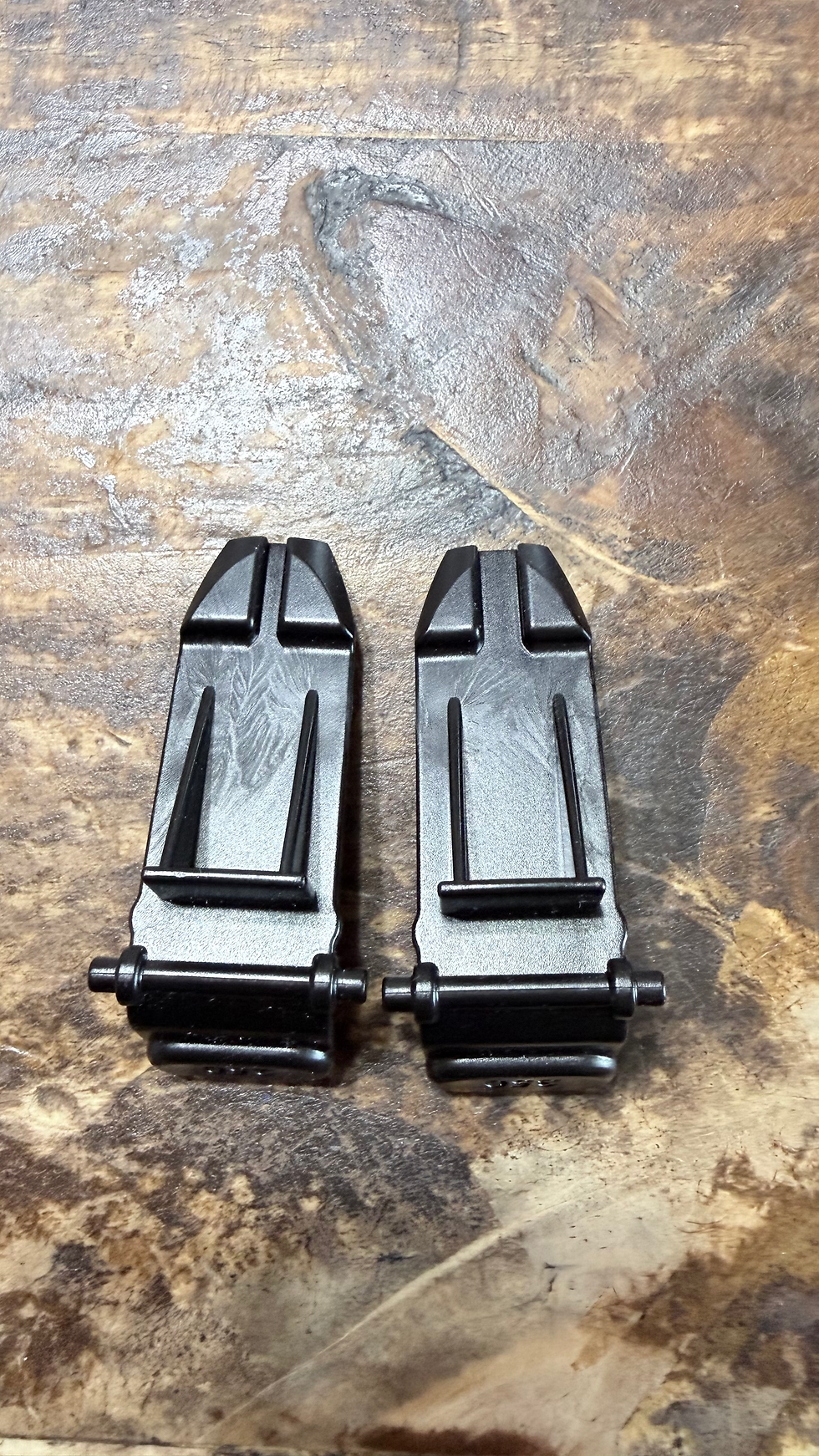
The device comes with three progressive landing plates, each more challenging than the last. The first two plates are fairly forgiving—they’ll catch major issues but allow some margin for error. The third plate demands near-perfection, which is exactly what makes it valuable for serious training.


The real genius is the blinder attachment. Early in training, you remove it to watch the visual feedback and learn what a drifting press looks like. As you develop better mechanics, you add the blinder and rely purely on feel. This progression mirrors how we actually shoot—we can’t watch our trigger finger during live fire, so we need to develop the muscle memory and tactile awareness to know when we’re pressing correctly.


My Training Progression

I’ve been using the TruBreak daily for about two months now. The first two landing plates were relatively easy to master—I moved through them quickly. But that third plate? That’s where the real work happens, especially when incorporating speed and transitions.

My typical daily session includes 10-20 transitions between those three targets, along with various speed drills. Even after two months, the third landing plate remains challenging. That’s exactly what I need—a training tool that continues to push me rather than something I master and set aside.
The learning curve was noticeable. It took about a month of consistent practice before I felt truly proficient with the drills I was running. And I’m still learning. The beauty of the TruBreak is that it scales with your skill level. You can always make it harder by increasing speed, adding movement, or running more complex transition patterns.
Real Results on the Range
The Bill Drill became my measuring stick for improvement. For those unfamiliar, it’s six rapid shots on a single target from the holster. Before the TruBreak, I could get all six shots in the A-zone at speed, but they were scattered throughout that zone—maybe spread across 6-8 inches.
After incorporating the TruBreak into my daily routine, those groups started tightening significantly. Now my six shots cluster in a 3-4 inch group. Same speed, much better consistency. That’s not a minor improvement—that’s the difference between acceptable hits and precise shot placement.
My transition accuracy improved even more dramatically. Where I used to consistently throw that first shot on a new target into the C-zone, I’m now landing in the A-zone on the first shot 80-90% of the time. I’ve eliminated a flaw that was costing me points in competition and, more importantly, could cost me effectiveness in a defensive situation.
The Blinder: Taking Visual Feedback Away
The blinder attachment deserves special mention. It seems counterintuitive to remove visual feedback when learning a physical skill, but that’s exactly what makes it effective. During live fire, you can’t watch your trigger finger—you’re focused on the sights and target. The blinder forces you to develop the same awareness you need during actual shooting.
With the blinder on, you truly start to understand the feel of a perfect press versus a drifting one. This tactile awareness transfers directly to live fire, where I can now sense when I’m about to pull a shot before I actually do it.
The Limitations
If I have one complaint, it’s the grip size. The TruBreak’s grip is on the smaller side, and it lacks a trigger guard. For someone with larger hands or anyone who’s particular about replicating their actual carry gun’s ergonomics, this is noticeable. I wish it had a full-size grip option to ensure complete transfer of proper hand placement and grip mechanics.
That said, this limitation hasn’t prevented the tool from being effective. The core skill—independent trigger finger movement and straight trigger press—transfers regardless of grip size. It’s a “nice to have” rather than a deal-breaker.
Is It Worth $49.95?
Absolutely. Consider what $50 of ammunition gets you—maybe 100-125 rounds, depending on caliber and current prices. That’s one or two range sessions. Could you develop perfect trigger control with 100 rounds? Unlikely.
The TruBreak provides unlimited reps with immediate feedback. No range fees, no ammunition costs, no cleanup. For defensive shooters and those serious about improvement, it’s one of the best training investments you can make.
The device is particularly valuable because it reveals flaws you don’t know you have. I genuinely believed my trigger control was sound until the TruBreak proved otherwise. It doesn’t just help you practice what you know—it teaches you what you’re doing wrong.
Who Should Use This?
The TruBreak is ideal for shooters who are serious about fundamentals. If you’re carrying for self-defense or competing, trigger control isn’t optional—it’s foundational. This tool helps you build and maintain that foundation with high-volume, high-quality repetitions.
New shooters will benefit from learning proper mechanics from the start. Experienced shooters will benefit from identifying and correcting bad habits that have crept in over time. I fall into that second category, and I’m grateful I discovered my transition flaw with a $40 training tool rather than during a critical moment.
The Bottom Line
The TruBreak has earned a permanent place in my daily dry fire routine. It keeps me honest about my trigger press, especially at speed. The progressive difficulty of the landing plates means I’m always being challenged, and the immediate feedback prevents me from reinforcing bad habits.
Two months in, I’m a better shooter because of this tool. My groups are tighter, my transitions are cleaner, and my awareness during live fire has increased significantly. For about fifty dollars, that’s exceptional value.
So here’s my question for you: What are you doing to improve? We all plateau in our shooting. We get comfortable with our current skill level and stop pushing ourselves. The TruBreak is just one tool, but it represents something larger—a commitment to continuous improvement. Whether it’s this device, a training class, dedicated dry fire practice, or simply being more intentional at the range, improvement requires action.


Comments